Chicago has more than thirty distinct styles of pizza, and you can eat nearly all of them without leaving the metro area. That is the thing outsiders miss. This city is not a deep dish town. It is a thirty-styles town that happens to be famous for one of them.
We eat our way through this list for a living, and this page is the whole map: what each style is, what makes it different, and where to find a good one. Consider it your pizza homework.
Start here, not with deep dish
If you have never eaten Chicago pizza, do not start with deep dish. Start with tavern style. It is the square-cut, crispy-edged, sausage-heavy pie that makes up more than 80% of the pizzerias in the Chicagoland area, and it is what people here actually eat on a normal Friday.
Deep dish is real, it is ours, and it is worth your time. But it is the pizza you order when your parents are in town. Tavern is the pizza you order because it is Tuesday. Get the baseline first and everything else on this page reads correctly against it.
The Chicago canon
The styles this city invented or made its own. If you only eat from one section, eat from this one.
- Tavern style is thin, crackery, cut into squares rather than wedges, and everywhere. Read deep dish vs. tavern style for the full argument.
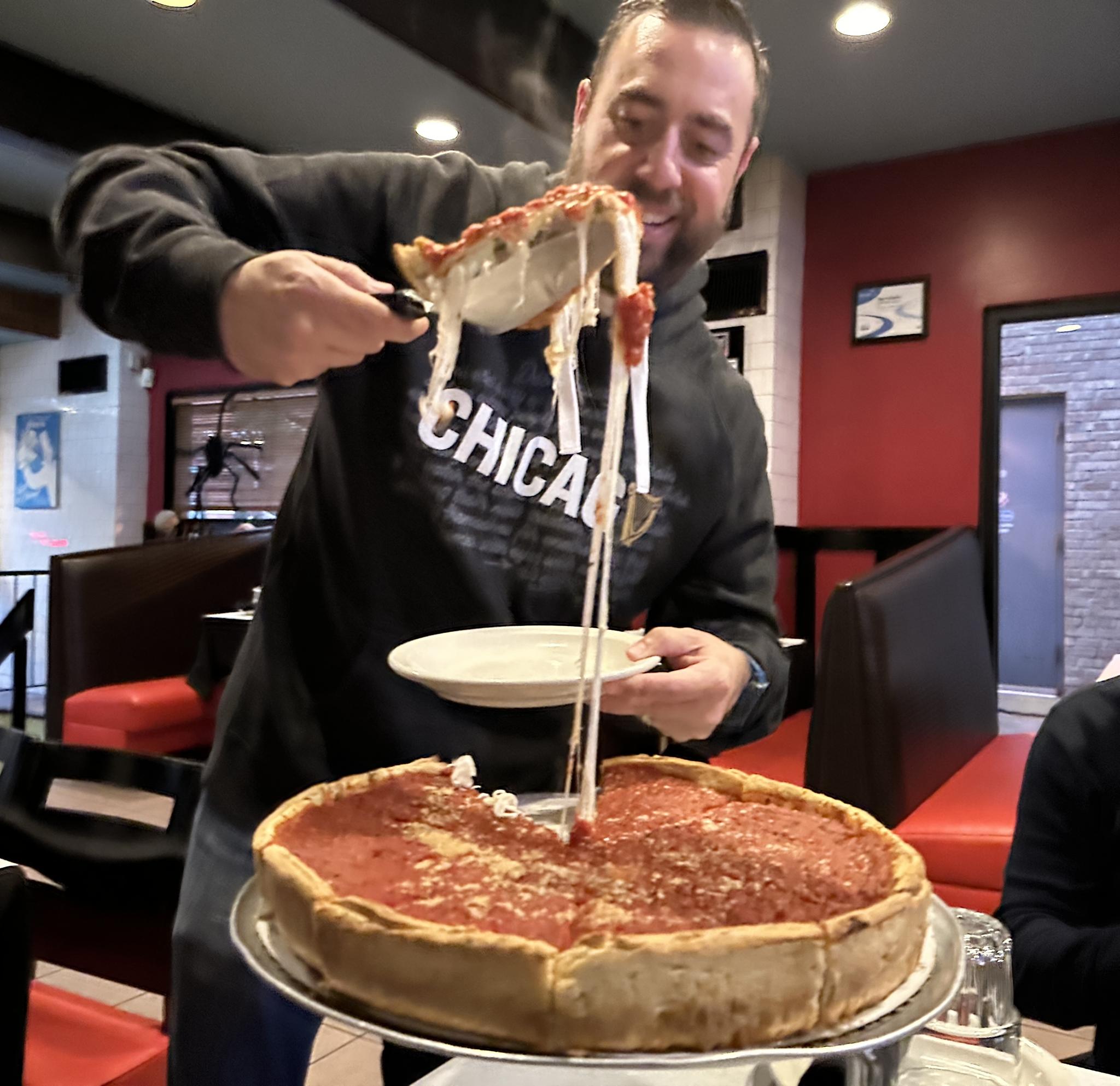
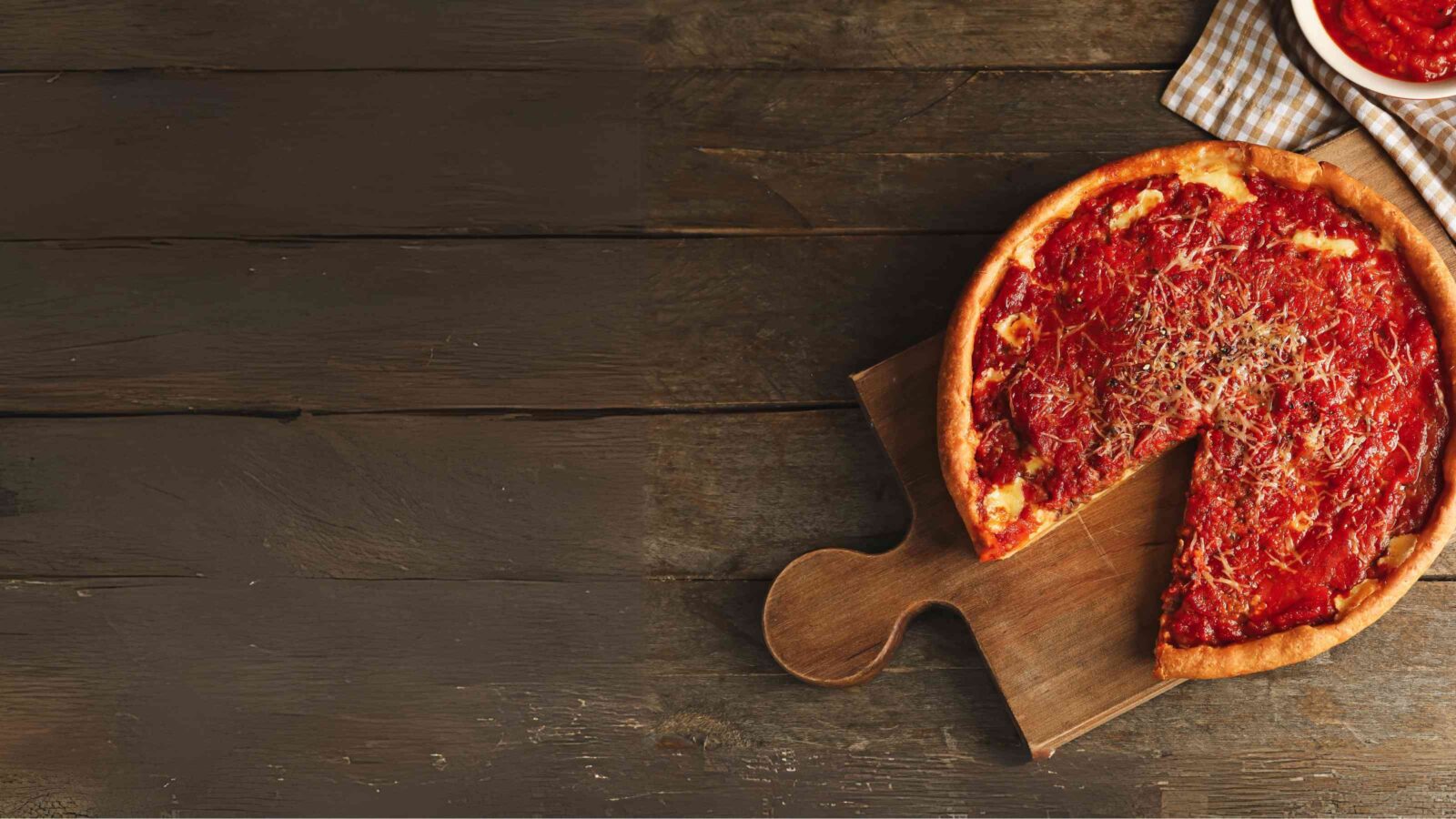
- Deep dish is baked in a tall pan and layered in reverse: cheese on the bottom, toppings in the middle, thick tangy sauce on top. The buttery crust behaves more like a pie shell than bread. A fork-and-knife situation.
- Stuffed adds a second sheet of dough over the cheese before the sauce. It is not deep dish, and it is definitely not stuffed crust.
- Pan pizza is thick, buttery, and crisp from the oiled pan it bakes in. Constantly mistaken for deep dish. Pequod's caramelized rim is the local argument for it.
- The pizza puff is a deep-fried turnover of dough, cheese, sausage, and sauce, sold from grills and hot dog stands. It exists almost nowhere else and it is deeply Chicago.
- The "sausage patty" pizza is our specific insistence on a single, edge-to-edge sheet of sausage rather than crumbles. Once you notice it you cannot unnotice it.
- Double decker stacks two pies into one. Because of course it does.
Styles that moved here
Chicago is a city of transplants, and the pizza followed them. Every one of these is being made well somewhere in this city right now.
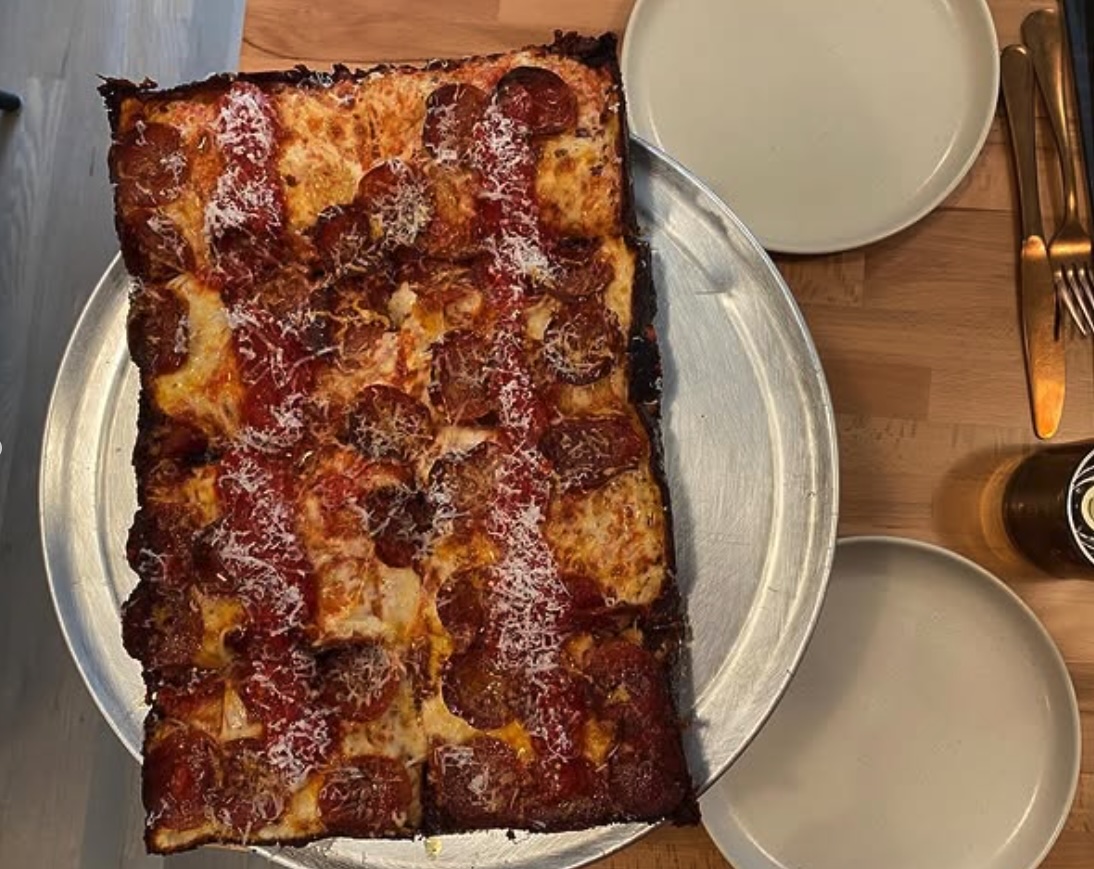
- Detroit style is rectangular, baked in an auto-shop pan, with caramelized cheese corners and the sauce spooned on after the bake.
- New York style is wide, thin, and foldable. Meant to be eaten one-handed while the other hand keeps doomscrolling.
- Neapolitan is the original: a soft, thin center and a puffy cornicione, blistered fast in a very hot oven.
- Grandma pizza is thinner, denser, and crispier than Sicilian, pressed into an oiled rectangular pan until the bottom goes almost fried.
- Sicilian is the thick, airy, rectangular ancestor Grandma pizza keeps getting confused with.
- New Haven is coal-fired, oblong, charred, and aggressively not-round.
- Roman comes in two forms: pizza al taglio sold by the cut, and the cracker-thin tonda.
- Quad Cities brings malt in the dough and sausage under scissors-cut strips.
How it is cooked changes what it is
Sometimes the method is the style.
- Coal fired burns hotter than almost anything else and leaves a char you cannot fake.
- Wood fired is the Neapolitan engine, and increasingly its own thing here.
- Campfire pizza is a real thing, and it is better than it has any right to be.
- Bakery pizza is the room-temperature, focaccia-adjacent square sold by weight at Italian bakeries and church fundraisers.
- Artisan is less a style than a promise about the dough and where the tomatoes came from.
- Thin crust in the American sense: pie-cut, soft in the middle, built for comfort.
Pizza at home
Most pizza in America is eaten in a kitchen, not a dining room. Pretending otherwise is snobbery.
- Home made is where most people's pizza opinions actually form.
- Frozen pizza deserves less contempt than it gets, and Chicago has strong regional loyalties here.
- Reheated is a style unto itself, and doing it right is a skill. The microwave is not the answer.
- Pizza rolls are a food group for an entire generation.
The rest of the map
The ones that make the list interesting.
- Heart-shaped, which is a shape, not a style, and we make it anyway every February.
- White pizza, no red sauce, all garlic and ricotta and restraint.
- Taco pizza, which sounds like a dare and is genuinely good.
- Breakfast pizza, egg on top, entirely defensible.
- Gas station pizza, which is either the worst pizza in America or a roadside miracle, with no middle ground.
- Stuffed crust, the 1995 Pizza Hut invention that local spots have since done better. Not to be confused with stuffed pizza, ever.
- Chain pizza, the no-fly zone, and why the family-run shop down the street is almost always the better call.
- Pizza cousins, the calzones, strombolis, and pizza breads orbiting the category.
The fastest way to learn all of this
Reading about pizza styles is a poor substitute for eating them next to each other. The comparisons only land when they are still in your mouth. That is the entire premise of the Original Chicago Pizza Tour: six styles, four neighborhoods, one afternoon, with someone explaining what you are looking at while you eat it.
If you would rather work through the list yourself, that is genuinely the better adventure. Take notes on your phone. Drive across town for the good one. Tell us what you found.
Common questions
More than thirty are genuinely available in and around Chicago, once you count the local canon, the styles that immigrated here from other cities, the cooking methods that produce a distinct pizza, and the everyday pizza most people actually eat at home. Chicago is unusual in that you can eat nearly the entire global taxonomy of pizza without leaving the metro area.
Deep dish is what Chicago is famous for, but tavern style is what Chicago actually eats. Tavern style accounts for the overwhelming majority of pizzerias in the Chicagoland area. Deep dish is the special-occasion pizza people order when family visits.
Stuffed pizza has a second thin sheet of dough laid over the cheese before the sauce goes on. Deep dish has a single crust with the sauce spread directly over the cheese and toppings. If you can see cheese before the sauce, it is deep dish.
Start with tavern style, not deep dish. Tavern gives you the local baseline, which makes every other style read correctly against it. Then try deep dish or stuffed as the occasion food it actually is.
Yes, and it is the fastest way to understand the differences. Tasting styles back to back in the same afternoon teaches you more than eating them weeks apart, because the comparisons are still in your mouth. That is the idea behind the Original Chicago Pizza Tour, which covers six styles across four neighborhoods.